Thursday, 28 October 2010

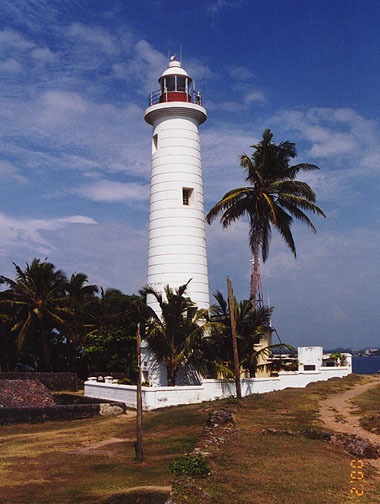
The Most Romantic Hotel In Sri Lanka Is Taprobane Island, And Should Be In Your Top 10 Destinations


The most romantic hotel in Sri Lanka is undoubtedly Taprobane Island, and you must take the opportunity to stay there for a few days during your vacation in Sri Lanka. Taprobane is an amazing place, and incredibly romantic, not the least of its charms is that you can only get to it by wading through the sea. The 2.5 acre island has 5 en-suite bedrooms with good size living areas, balconies, verandah, lovely tropical gardens, and of course an infinity pool.
There is a staff of five who only exist to pander to your every whim. It is of course hardly an hotel, more a fully staffed villa, and in my book absolutely perfect for a honeymoon stopover, whilst enjoying Sri Lanka. Taprobane is really a throw back to a long lost colonial era, and you could easily be in the 1930?s with the huge walk around verandahs, the colonial style furnishings. What I liked best was the fact that you could ask the staff for almost anything in the way of food, particularly seafood, and they would wade ashore and get it for you ? nothing it seemed was too much trouble. You can feel less than secure in the tropics, even although the Sri Lankans still hold the English in very high esteem, but the presence of a security guard should allay any fears. There really is nothing to do, but of course this is perfect as a top honeymoon destination. You can simply swim, read, paint, eat, swim, read, paint, eat, drink????? The main drawback is the journey from Colombo airport, of over 100km. This doesn?t seem much, but the roads are crowded, and it could take as much as five hours, which is a long time after a fourteen hour flight. My advice would be to overnight nearer Colombo, or visit Taprobane in the middle of your honeymoon in Sri Lanka.

Friday, 22 October 2010

Sri Lanka: Wild at heart


Sri Lanka teems with exotic wildlife, from big cats to the shy slender loris – and with the country welcoming tourists once more, now is the time to visit

By Mike Unwin


The eyes have it. At least they do when it comes to spotting small nocturnal mammals in dark treetops. And the two eyes that suddenly materialise in our torch beam stop us in our tracks: twin points of disembodied light fixed in the blackness, like candles in a cave. We crane up through the foliage for a better view. Then just as suddenly – as though switched off at the wall – they disappear, leaving our beam to play aimlessly over a bare branch.

"Quick!" urges my guide, Nilantha, pointing with unerring certainty to the right. "That tree there." And sure enough, we're soon on to those eyes again – this time for long enough to clock their owner. Bingo! It's a slender loris. This diminutive, bizarre-looking primate is found nowhere on the planet but Sri Lanka. Binoculars reveal saucer eyes and skinny limbs as, looking like some arboreal ET, it scrambles away through the branches.

It is one of those wildlife eureka moments: one second you're trudging along fruitlessly, your mind set on dinner; the next, you're eyeballing something straight out of an Attenborough documentary. Granted, a slender loris is hardly big game. Nonetheless, there's a thrilling sense of secrecy to the sighting and I'm delighted my last night has produced something so special. Walking back, the orchestra of frogs and crickets seems to shift up a gear and the fireflies twinkle that much more vigorously.

Rewind a week or so and I'm watching and waiting for another unseen animal. This time the setting is a dusty 4x4 in the midday heat of Yala National Park, far to the south-east, and the animal is rather larger than a loris. The alarm whistles of spotted deer have given the game away and now, as agitated monkeys join the chorus, there's a tension in the air that can only mean a predator at large. We don't wait long. Out on to the sandy road pads the spotted feline form we'd been hoping for. "It's a young male," says my guide, Chitral Jayatilake, leopard photographer extraordinaire. "I recognise this chap; his mother must be around somewhere."

The leopard pauses, fixing us with a amber-eyed glare and twitching the curled tip of his long tail, then slinks into the thorn thickets. Freewheeling gently forward, we watch the dappled shoulders seesaw through the long grass to the foot of a tamarind tree. The cat peers around again then in one fluid bound is up aloft, draping himself over a branch as he settles down in the shade of the canopy.

Wildlife sightings don't come more impressive than a close encounter with a leopard. And leopard encounters, it seems, don't come any easier than at Yala where, with no larger predators for competition, this notoriously elusive cat has grown unusually bold. My four days in Sri Lanka's premier national park produce five excellent sightings: a success rate that competes with anywhere in Africa.

But Yala is not only about leopards, despite the one-track agenda of many visitors. Wildlife here is prolific. At ancient man-made reservoirs, known as tanks, we watch water buffalo wallow in the shallows, while shy sambar deer tiptoe down to drink and wild boar root beneath the fringing trees.

On a quiet loop road, large tracks lead us around a corner to a party of elephants. The beasts crash away into the bush, trumpeting their displeasure and shepherding a young calf to safety, its fuzzy contours just visible between the legs of its elders. The birds are impressive, too. Some seem strangely familiar: the peacocks that strut around the clearings and the junglefowl that dash through the thickets are perhaps too reminiscent of their domesticated descendants to earn the admiration they deserve. But others, such as the huge-conked Malabar pied hornbills that lurch overhead and the little green bee-eaters that hunt hawk dragonflies beside the road, are captivating.

On our final day, bouncing back to make the park exit before sunset, we jam on the brakes as a shaggy black mop ambles into a roadside clearing. It's a sloth bear, lured out by the scent of fruiting palu trees on the evening breeze. The animal raises a long pale muzzle to sniff myopically in our direction before shuffling back the way it came.

Back at the lodge that evening, as another 4x4 swings into camp and disgorges its cargo of khaki-clad visitors, I find myself mystified that Yala is so little known. But Chitral reminds me that this jewel of a park – like most of Sri Lanka – has had more than its fair share of troubles.

First there was the tsunami. Yala sits beside the Indian Ocean, and both staff and guests at the reserve were among the thousands who lost their lives on the morning of 26 December 2004. Our driver, Ajith, describes how he had turned inland on impulse to follow up a rumoured leopard sighting and missed by minutes the fate that befell four tourists at a beachfront picnic site. He shows us the memorial that now commemorates this tragedy, but even now he will not set foot on the beach. "Perhaps one day," he says. "Not yet."

And then there was the war. In May 2009, the Sri Lankan government finally brought a bitter end to the civil conflict that had beset the island for more than 30 years. In its later stages, the LTTE (Tamil Tigers) had established camps inside Yala, prompting the authorities to close all but one sector of the park, in effect bringing tourism to a standstill.

Today, controversy rages over the brutal resolution of the conflict, and thousands of people in the north remain displaced. Yet there is an overwhelming sense that the island is again opening up. And the good news for the visitor seeking wildlife is that neither war nor tsunami seem to have had any lasting impact on the natural environment. Indeed, while Yala is Sri Lanka's top safari drawcard, Chitral tells me how other long-neglected national parks, such as Wilpattu in the north-west, are teeming with wildlife and ripe for exploration.

No visitor to Sri Lanka can ignore the island's rich cultural heritage. And so from Yala we head northwest towards Kandy, the sacred Buddhist city that was the last of Sri Lanka's ancient Sinhalese capitals before the British took over in 1815. On the map it looks a shortish journey. On the road, however, we spend the best part of a day toiling up from the paddyfield patchwork quilt of the south-west, via the hairpins and waterfalls of the escarpment, on to the central plateau, with its topiaried tea estates and colonial hill stations.

At each stop along our route nature and culture are pleasingly intertwined. Thus the great granite Buddhas at Buduruwagala are set off by a crested serpent eagle that circles above them, while woolly furred bear monkeys – a mountain race of the endemic purple-faced leaf monkey – cavort around the treetops of Hakgala Botanical Gardens, where quinine was developed.

This same alluring blend continues the next day as we head east from Kandy to explore the ruins of Anuradhapura, built in 400BC as the first of Sri Lanka's ancient capitals. Despite the sheer scale of this site – one enormous stupa comprises 90 million bricks – the experience is overwhelmingly relaxing. Barbets call metronomically from the fig trees that shade our wanderings and grey langur monkeys strut around temple walls like delinquents on a school trip. In one rocky outcrop we enter a cave to find an orange-robed monk meditating on a rush mat, as though the last 2,000 years had never happened.

More World Heritage Sites follow, including the monumental rock fortress of Sigiriya and the overgrown ruins of Polonnaruwa, the island's second ancient capital. And as I brush up on my Buddhist mythology and marvel at the technology of ancient reservoir sluices, so my wildlife count ticks over: golden jackals trotting across the road; a roost of flying foxes; a two-metre-long monitor lizard.

The theme continues back at the delightful Chaaya Village hotel in Habarana, my base for exploring Sri Lanka's "cultural triangle". Here I discover giant squirrels and brown fish owls in the lakeside trees, and watch a mongoose scamper across the restaurant terrace as I tuck into yet another fabulous curry.

A short drive from Habarana is Minneriya National Park, notable for "The Gathering" – a seasonal congregation of elephants that is perhaps the largest in Asia. Numbers peak at more than 300 in July and August when the lake is at its lowest. At the time of my visit they were more widely dispersed, but we still find good numbers browsing the tall grasses of a nearby "ecopark" and even meet one impressive tusker sauntering down the main road as we return to the lodge after dark. Sri Lanka's jumbos, it seems, know no boundaries.

The challenge this presents to farmers is vividly brought home the next morning on a guided nature walk through the community around Habarana. Rickety wooden watchtowers among the paddyfields overlook the tangled forest edge, from where crop-raiding elephants emerge soon after dark. I ask one watchman, via the translation of my guide, TK, how he deters the raiders.

"I shout as loud as I can," he explains, and nods towards his assistant – a ferocious-looking dog chained to a coconut palm. But I'm guessing that the job might be a little trickier than he is letting on.

Marauding pachyderms notwithstanding, one could easily become dewy-eyed about this place. The homesteads, while basic, seem well-provided, the fields are fertile and well-irrigated, and nature runs riot in a manner that would surely be deemed unproductive by most Western farmers. We stroll between homesteads, watching chillies being harvested and sipping fresh coconut milk. Meanwhile, TK keeps up his nature guide's vigilance, spotting an emerald vine snake camouflaged among the foliage, a crocodile slipway at the water's edge, VC and an exquisite sunbird nest – fashioned from spider webs and lichen – in which we can just see the protruding bill of the sitting female.

We return across a reservoir by dugout canoe, kingfishers flashing past the bow, and then transfer to a bullock cart for the final stretch. Lying back on the boards I close my eyes and listen to the creak of wood and leather and the soft commands of the driver, as we rumble over the ruts and puddles left by last night's elephants. Our morning has hardly been a big-game safari. But for sheer immersion in nature – and a culture with which it seems seamlessly integrated – it has been every bit as satisfying as chasing leopards around Yala.

Sri Lanka's final wildlife secret is a big one – literally. Recent years have revealed a large and hitherto unknown population of blue whales off the southern coast. In peak season, from November to April, the port of Mirissa records sightings on more than 90 per cent of boat trips: a success rate that compares with any on the planet.

My arrival in Sri Lanka has coincided with the start of the monsoon, which means the southern seas are too rough to risk a tourist. With the war over, however, a new whale-watching front is opening up in the north-eastern port of Trincomalee, where weather patterns are different and the whales often venture close inshore.

Chitral's mind-blowing photographs are too hard to resist: we decide to take the road north and give it a shot. Soldiers wave us through military checkpoints with a smile. And "Trinco", when we arrive, seems to be thriving: my swanky hotel, the Chaaya Blue, opened just days earlier.

Unfortunately the whales play hard to get. After a morning fruitlessly combing the horizon for spouts and tail flukes, we admit defeat. A shake of the head from passing Tamil fishermen confirms that there've seen none this week.

Fair enough: if I'd wanted my whales served on a plate I should have turned up in the south a month earlier. All the more reason to return to Sri Lanka, I reflect, as our boat turns for home. And besides, where's the fun in wildlife if it just follows the itinerary?

As if on cue, three sleek backs break the water across our bows. "Spinner dolphins!" shouts Nilantha. "Look to the left." I turn to see the water churning for 100 metres or more as a flotilla of these exuberant cetaceans bear down on us.

There's nothing like a dolphin or two for raising the spirits – let alone 200 of them – and their beaky grins seem like a fitting final image with which to leave Sri Lanka. But I still have one more night left. "Now Nilantha," I say, "about that slender loris..."

Travel essentials: Sri Lanka

* Mike Unwin was a guest of World Big Cat Safaris (01273 691 642; worldbigcatsafaris.com) and the Sri Lanka Tourist Board (0845 880 6333; srilanka.travel). A similar tailor-made 14-night trip from World Big Cat Safaris costs from £1,950 (per person based on two sharing), including internal transfers, half-board accommodation, game drives in Yala National Park, a whale-watching expedition and a variety of cultural and historic excursions. International flights to Colombo are not included.

Getting there

* The only non-stop flights from the UK are on SriLankan (020-8538 2001; srilankan.aero) from Heathrow to Colombo. Connecting flights are widely available on Gulf-based airlines: Emirates, Etihad, Gulf Air and Qatar fly via their respective hubs.

Staying there

* Chaaya Village, Habarana (00 94 6 6227 0047); Chaaya Blue, Trincomalee (00 94 2 6222 2307). For more information on both, see www.chaayahotels.com

Ref: http://www.independent.co.uk/travel/asia/sri-lanka-wild-at-heart-2114018.html

Monday, 18 October 2010

Sri Lanka prepares for rebirth of tourism industry


Post-war Sri Lanka is preparing for a rapid growth in tourism numbers over the coming five years as the local industry gets back on its feet - and international visitors once again have faith in the security situation in the island nation.

The Pacific Asia Travel Association this week predicted around 500,000 tourists would have headed to Sri Lanka by the end of this year while the Sri Lankan government has announced plans to welcome 2.5 million visitors a year and add a further 25,000 hotel rooms nation wide by 2016.

"With an end to its civil war, Sri Lanka has now entered a period of relative peace and political stability and international visitors are responding with strong demand. Actual arrivals are well above the forecast for 2010 as at August,'' PATA said on its website this week.

The official site of the Sri Lanka Tourism is currently heralding the fact that The New York Times listed the country as number one in the "31 places to visit in 2010" (http://www.nytimes.com/2010/01/10/travel/10places.html?_r=2) while National Geograhpic this year rated the destination as the second best island to visit in the world, behind Cuba.

And this week Sri Lanka's Minister for Economic Development Basil Rajapaksa said the country was expecting new highs for its tourism industry.

He said he hoped also the expat Sri Lankans the world over would help spread the good news.

"This is an opportunity for expatriate Sri Lankans holding other citizenships, living overseas, to visit the island and bring along their friends from those countries. They will appreciate that they can visit the country without any fear for their safety and I invite them all to enjoy what Sri Lanka can offer,'' he told the Colombo Page internet news service.

The country is currently upgrading its famous wildlife parks and zoos while building new hotels and recreation facilities, according to Rajapaksa.

As well as more than 100 kilometers of coastline, rainforest and wildlife parks, Sri Lanka currently has eight UNESCO World Heritage sites, some of which were off-limits during its civil war, which lasted from 1983 until May last year.

Visitors to Sri Lanka in 2009 (by region):

Western Europe 170,123
South Asia 126,205
North East Asia 31,439
Eastern Europe 26,310
Australasia 26,068
North America 24,948
Middle East 23,741
South East Asia 16,890
Others 2,166
Total: 447,890

Sri Lanka Tourism (http://www.srilanka.travel)

PATA (http://www.pata.org)

The New York Times' "31 places to visit in 2010" (http://www.nytimes.com/2010/01/10/travel/10places.html?_r=2)

Ref: http://www.independent.co.uk/travel/news-and-advice/sri-lanka-prepares-for-rebirth-of-tourism-industry-2109842.html

Friday, 3 September 2010

Sri Lanka, a terrific spot for wildlife, cuisine and culture

Sri Lanka is once again a terrific spot for those in search of some sub-continental wildlife, cuisine and a welcoming culture with the end to 25 years of conflict and the devastating tsunami, states CNN Go in a report published yesterday (1 Sep).

The writer Carmen Jenner explains that Sri Lanka is now ‘experiencing a resurgence’, and adds ‘nowhere is this more visible than in its capital Colombo and on the road to Galle’.

The airport is a duty-free haven for white goods and demonstrates Sri Lanka’s industrious side, a strength that propels them forward and beyond their hardships, she explains.

The CNN Go writer advises travelers not to be too conscious of looks in the humidity and tells them to ‘throw out that mirror and flop down on a beach instead; Unawatuna Beach in Galle is always a popular choice’.

The writer explains the ancient history of Sri Lanka and outlines several historical locations that tourists could visit.

Sunset over Sri Lanka's Unawatuna Beach

‘Trek to the Cultural Triangle spanning from Kandy (116 kilometers north east from Colombo) to Polonnaruwa (140 kilometers northeast of Kandy) to Anuradhapura (100 kilometers northwest of Polonnaruwa).

There is a round ticket that can be purchased at the town museums or entrances of these sites or at the Colombo Cultural Triangle Office (11 Independence Ave, Colombo, tel. 011 267 9921) or the Cultural Triangle Office in Kandy (Palace St, tel. 222 2661). The World Heritage City and the hill-top capital of the Central Province is Kandy and hosts the Tooth Relic of the Buddha in the Sri Dalada Maligawa, the holiest shrine in the Buddhist world.

Anuradhapura

Sri Lanka’s ancient capital Anuradhapura reveals Sri Lanka’s former glory with its massive dagobas (domes), the sacred Bo Tree (the world’s oldest recorded surviving tree) and architecture dating back to the third century B.C.’

‘The grand medieval capital of Polonnaruwa showcases the well-preserved ruins of palaces, imposing Buddha sculptures, monastic complexes, and a massive artificial lake called the Sea of Parakama. Sixty-seven kilometers east of Polonnaruwa is the sacred complex of Sigirya, an enormous rock that rises 200 meters with palace ruins on the top and luscious gardens at its foot. Heading 116 kilometers south of Colombo is the fort town of Galle, famous for its Dutch-colonial buildings, artisans, and its tres chic reputation. Unscathed by the tsunami and with continued foreign investment, the fort houses some of the country’s most prized real estate’.

Carmen Jenner also explains the rich flora and fauna in Sri Lanka.

‘Those seeking an interlude with Mother Nature’s creatures have a plethora of national parks and wildlife sanctuaries hosting the illusive leopard. However, there are regular sightings of elephants, monkeys, squirrels and butterflies throughout any journey on the island, and on occasion hedgehogs can be seen walking on leads by their owners. ‘On the road from Colombo to Kandy is the Pinnawela Elephant Orphanage, which is a breeding ground and orphanage for wild elephants, and plays host to the largest herd of captive elephants in the world.

• Yala National Park, Monaragala, Kataragama
• Kosgoda Turtle Conservation Project, Galle Rd (beachside) just north of Kosgoda, tel: 091 226 4567
• Pinnewala Elephant Orphanage, Rambukkana Rd, Kegalle

Elephants keeping cool at the Pinnawela Elephant Orphanage

Read more: From Colombo to Galle: A Sri Lankan travel revival | CNNGo.com http://www.cnngo.com/explorations/play/sri-lankan-travel-revival-374233#ixzz0yMHNpr2J

Elephants keeping cool at the Pinnawela Elephant Orphanage

The writes also says that ‘foodies’ from all over the world are ‘clambering to learn how to reproduce the curries in their own kitchens’ as ‘this land of tea bushes offers a cuisine so fresh and tasty’.

‘Cooking schools demonstrate the difference between Indian and Sri Lankan curries, which have a larger spice base and use subtler cooking methods’.

Carmen explains that the best way to enjoy Sri Lankan dishes is to do away with the utensils and eat it by hand.

‘As quoted by chef Peter Kuruvita of Flying Fish fame in Sydney, “To eat Sri Lankan food with utensils is like making love through a straw.” Learning how to eat with only your right hand is a practiced craft but once mastered, you won't want to go back’, the writer says and lists a range of restaurants and cooking classes that tourists could go to.

The capital Colombo is ‘brimming with culture’, she adds and explains how the city of Colombo can be experienced.

‘Offering plentiful dining options, it’s mandatory to have high tea or a cocktail at sunset at the Galle Face Hotel. Across the road, the Galle Face Green heaves at dusk over the weekends as kites frolic in the breeze. Shopping zealots will notice the mall culture hasn’t caught on -- yet. Department stores, galleries, and gem shops are bountiful and the adventurous shopper will lose themselves in the Pettah Bazaar.’

There are trains between Colombo, Kandy, Anuradhapura and Galle and the planned domestic flight schedule and new highways will reduce some traffic congestion and traveling times, as well as opening up areas that haven’t been available to tourists until very recently, like Jaffna, Trincomalee, and their surrounds, the CNN Go writer states.

Sri Lanka can be visited year round and the monsoon season hits the south from June to October and from December to April in the north. Regardless of the time of year, the weather is hot and steamy, the sun is harsh and never go anywhere without water and sunscreen, the writer advises.

With architects opting for tropical modernism, air conditioners battle with the humidity in rooms that are at one with nature. Those flush with cash will flock to boutique hotels while those on a leaner budget should opt for guest houses, which also usually serve authentic Sri Lankan cuisine, the writer adds.
http://www.cnngo.com/explorations/play/sri-lankan-travel-revival-374233

Tuesday, 24 August 2010

Galle, Sri Lanka: A Visit Can Bring You Back In Time

The Famous Fort of Galle, pronounced as “gawl”, is not what you would expect if you will first get to look at the charmless commercial district of the area. However, upon your entry into the Fort’s gates, it would be as if you are transported back in time, particularly the Dutch colonial period.


The reason for this is simple. The Dutch built this 36 hectare fort in 1663. This port makes up a very big part of Galle, Sri Lanka. At that time, even Paul Theroux, who is known to be very hard to please, only have great things to say about Galle. Indeed, Galle’s Fort has inside it a number of culture as well as structures dating back over hundreds of years.

A visit in Galle will truly be an unforgettable one. Even a simple walk on its streets will make you appreciate the great architecture of structures as well as get a breathtaking view of the ocean and the nearby towns. Galle’s Fort was even recognized by no less than UNESCO as a World Heritage Site.

Aside from being a perfect place to visit however is the allure of Galle for being a community of working locals. You will find in Galle numerous courts, export companies, administrative offices and other types of offices. Given this energy vibrating all around, the income from tourism becomes unnecessary.

Yet, more visitors are now enticed to give Galle a visit especially with the fast development and increase of hotels and boutiques that makes it more conducive to entertaining visitors. Many locals are even selling properties, such as vintage buildings, to foreigners for possible investors who will bring their business in the city. This is despite the devastation it experienced as a result of the tsunami that was brought about by the 2004 Indian Ocean earthquake.

In fact, after the tsunami, Galle immediately went back to its feet and even came up with the world renowned Galle International Stadium which became a cricket ground. Likewise, it is now on the path of making itself a Green City that will not only allow the conservation of its rich inheritance but also make Galle a great tourist destination.

There is no doubt about it, Galle, Sri Lanka is a place you should not miss seeing if you want to enjoy every minute of your travel. Those who give it a visit prefers to stay within the Fort. For a better schedule and package, plan your trip ahead and have an online travel consultant help you will everything necessary before your trip.

Ref: http://factoidz.com/galle-sri-lanka-a-visit-can-bring-you-back-in-time/

Tuesday, 17 August 2010

Hambantota Port will become a reality on 15th August 2010


The Water Influx ceremony of the world's first international harbour completely built inland will be inaugurated by President Mahinda Rajapaksa at 9.00 a.m. on Sunday, (15th August). Hambantota had been a well known sea port in the ancient history of Sri Lanka as the name "Hambana" itself being the name of sailing vessels that had been used in the ancient times that frequented many Asian ports. Even the activities of Hambantota as a sea port are mentioned in the R.L.Bohier's book on Sri Lanka written in the Second Century. Hambantota is situated at closest point to the main shipping route that connects East and West. 200 to 300 ships ply this area daily, and now they call at Singapore and Dubai Ports.

The idea of building a modern port in Hambantota was first mooted by the late Parliamentarian Mr. D.A.Rajapaksa, the father of President Rajapaksa. But it did not materialize. Later the idea came up time to time, raised in Parliament by many Mps. It remained a suggestion but never saw the light of the day due to many reasons. The Chairman of the Sri Lanka Ports Authority Dr. Priyath Bandu Wickrema says that a foreign company which was hired to carry out a feasibility study reported saying the location, Hambantota was not suitable to build a harbor and this brought the whole project to halt. However, Mr. Mahinda Rajapaksa as the Prime Minister then, was not impressed by the pessimistic attitude of the report and was determined to overcome the negative reaction and proceed with it.

Upon becoming President in November 2005, China was chosen to fund the project. Dr. Bandu says that Sri Lanka made an open request for funding and China was the first to respond. The port was built on a 2000 hectares of land and 450 families lived in the area were relocated with payment of adequate compensation.

The Hambantota Port is being constructed by the Chinese companies China Harbour Engineering Company and Sinohydro Corporation. The total cost of the first phase of the project is estimated at $360 million. 85% of the funding is provided by the Chinese Government and the remaining 15% by the Sri Lanka Ports Authority.

The mouth of the natural harbour at Hambantota has a 22m depth. When completed, the port will have a 1.5 km long breakwater, with a minimum basin depth of 17m. The turning circle will be 600m. A dam will also be built to prevent flooding in nearby areas, and a seawall made of interlocking concrete blocks will protect the port from high seas.

A $550 million tax-free port zone is being set up outside the port, with local and international companies expressing interest in setting up shipbuilding, ship-repair and warehousing facilities in the zone. The Port is expected to provide 13,000 direct and indirect employments to over 100,000 people

The first phase of the Port will consist of two 600m general purpose berths, a 310m bunkering berth and a 120m small craft berth. It will also contain a bunkering facility and tank farm which will include 8 tanks for marine fuel, 3 tanks containing aviation fuel and 3 for Liquid Petroleum Gas (LPG). A 15 floor administrative complex is also under construction as part of the project.

The port will also have facilities to handle port related large scale industries such as handling and bagging of cement and fertilizer in addition to storage of fuel and LP Gas thereby providing opportunity for a third LP Gas operator to open up business that would create competitiveness in the gas market. The oil tank farm will have 14 tanks of which 8 tanks will be for storage of fuel for bunkering facilities for vessels, 3 tanks for storage of aero fuel and the other 3 tanks for storage of LP Gas.

The total project will be completed in 4 stages and the first stage operations will commence in November this year, one year ahead of schedule. During the first stage the port will handle 3 ships a day, and after completion of the total project, the Port will be able to handle 33 ships at a time.

Monday, 16 August 2010

SriLankan Airlines and Hotel Win International Recognition

SriLankan Airlines has bagged the top award at the Changi Airline Awards 2010 for the highest growth in passenger traffic in South Asia last year.


The event is organized to recognize “the contribution of airlines to Singapore’s air hub status” and to celebrate the partnership between Changi Airport and the airlines. According to a statement on its website, both the airport’s passenger traffic and freight during the first five months of 2010 has increased by approximately 17 percent.

Earlier this month, SriLankan Airlines was also recognized as the Best Airline Operator for South Asia for the fifth consecutive year at the annual Kuala Lumpur International Airport Awards in Malaysia held to honor contributions to the country’s travel and tourism industry.

In an award of another kind, the Unusual Hotels of the World (UHOTW) website chose Sri Lanka’s KumbukRiver eco-lodge in Buttala in south-eastern Sri Lanka as a unique experience for visitors. Situated on the banks of a river adjoining the Yala wildlife sanctuary, the eco-resort is famous for its 40-foot high structure in the shape of an elephant.

“The beautiful surroundings, the river and the unique facilities of the lodge invite visitors to privacy to become at one with nature,” UHOTW said. “Some may leave wondering if they really need electricity again. Such is the beauty and setting of this idyllic eco hideout.”

Ref: http://www.allvoices.com/contributed-news/6432809-srilankan-airlines-and-hotel-win-international-recognition

Saturday, 14 August 2010

Mattala Airport project takes off


The project at a glance

Objectives

* To play a vital and supportive role in the development activity in the Hambantota region and capture market share of the regional traffic growth.

* To promote the Air-Sea-Transshipment Hub operation in conjunction with the Hambantota Harbour

* To be a key component in the development efforts of the Eastern and Southern coasts

* To be an alternate airport to BIA, offering tremendous fuel and weight savings to airlines, resulting an increased passenger and cargo volume throughout the country

* To facilitate the establishment of a gateway for economic and investment infusion into Sri Lanka.

#############

* Estimated project cost - US$ 210,000,000 (US Dollars two hundred and ten million)

* Extent of land - 2000 hectares. Initial construction would cover an extent of 800 hectares

*Aerodrome design - The aerodrome will be designed to meet the international specifications

*Runway length - Is proposed as 3500 metres and the width is proposed as 75 metres where new A380 could land.

* Taxiways - Recommended to have a 60 metres long taxiway from the runway centre line to the edge of the apron.

* Apron - 10 parking positions will be provided initially, the pavement of the parking apron - 80

* Airfield capacity - Annual service volume of this aerodrome at short and medium/long-term planning horizons will be 30,000 and 600,000 movements respectively

Terminal and related buildings - Size of which is proposed to be 10,000 square metres to accommodate 800 peak hours and 100 domestic passengers

Friday, 13 August 2010

Sri Lanka the surprise package: Why Asia's forgotten destination is an explorers' paradise now the civil war is over

It may not have set off a loud ping of the radar – stories about how Country X is now deemed safe to visit get less attention than shouty headlines about how Country Y is now considered a dangerous hellhole to be avoided by all – but last week’s announcement that the Foreign and Commonwealth Office has lifted the last of its no-go restrictions on travel in Sri Lanka is a small but definite reason to be cheerful.

The basic figures of Sri Lanka’s existence make fine reading: A ‘teardrop island’ (as the description usually runs) of 25,000 square miles, coated in tropical foliage and dotted with lively cities, sat in the Indian Ocean 20 miles to the south of India.

But there is a more damning statistic that Sri Lanka is now seeking to put behind it – the (nigh-on) three decades of civil war that have seen the country written off by many as a risky choice in tourism terms. Here is a tropical isle that, between 1983 and May of last year, was the scene of hostilities that robbed an estimated 100,000 people of life, and cost the country a great deal in terms of its stability, economy and reputation.

Even now, 15 months after the final shots were fired, numerous issues remain in need of address. The losing side in the struggle, the Liberation Tigers Of Tamil Eelam (commonly known as the Tamil Tigers), is condemned as a terrorist group in 32 countries (including the United States, the UK and the rest of the European Union), but accusations of war crimes and unethical tactics have also been levelled at the Sri Lankan government, in the wake of a conflict that has sullied all who took up arms.

Civil wars, with the ghastly spectre of brother attacking brother, tend to be the bitterest of fights and the cause of the deepest, angriest scars (as Spain’s continued reticence over who did what to whom between 1936 and 1939 shows), and the official investigation into 26 years of pain, which began this month, has much work to do.

And yet, while the FCO is still guarded in its stance on Sri Lanka, underlining that there remains ‘a general threat from terrorism’, particularly in the north of the country (where the Tamil Tigers had hoped to establish an independent state), the comment that ‘we no longer advise against all travel to Kilinochchi, Mannar, Mullaittivu and Vavuniya’ is a reason for cautious optimism for anyone keen to experience what is one of the world’s more intriguing – but less visited – areas. A corner has surely been turned.

Of course, Sri Lanka is not an entirely unmeasured quantity. With the civil war mainly confined to the north and north-east during its third decade, the beaches of the south and west coasts have – lately, at least – proved happy turf for sun-seeking tourists.

But the interior – a place that hovered a little too close to the flying bullets and rolling tanks for many tourists’ tastes – retains a definite mystique, and a sense of being unexplored. Take a look of the photo at the top of this piece. This is Sigiriya, a 370-metre volcanic bluff that, in many ways, is the Ayers Rock of South East Asia. It certainly bears comparison – a giant boulder that rears above the largely flat terrain around it, and is regarded with reverence by the local population. In fact, if it existed in a country better publicised than Sri Lanka, it would surely be as famous as Uluru, a global wonder whose sheer flanks and 2000-year back-story as fortress, palace and monastery would be the centrepiece of many a round-the-world tour. But as it is, it lies hidden in the shadows – metaphorically at least, because there is little shadow to be had once you reach the bare summit and find yourself completely at the sun’s mercy.

I took the photo of Sigiriya just before twelve on a sweltering day that was crammed with personal discoveries. Two hours later, I drove into Polonnaruwa, the onetime 12th century capital of the island, but now an enclave of ruins that might match Pompeii as an echo of past times if anyone actually knew about it. But instead, I walked through its dust and decay – through tumbledown temples where statues idle away eternity (see above), and past thick stone tablets on which forgotten wisdom is carved in florid writing – in relative isolation, sharing this ghost of a lost era with little more than the occasional backpacker and one party of visibly bored school children (school children always look bored on school trips. This doesn't make what they are seeing any less impressive). And this was before I encountered Polonnaruwa’s twin glories – two Buddha statues, one seated (see below), the other reclining, head on pillow – that can only inspire awe in the observer, whatever your religious affiliation (or lack of it).

There were other grand moments – Nuwara Eliya, a high-altitude outpost that, with its race track, golf course and faded department stores, still has the ambience of a British hill station – which is exactly what it was in the 19th century, when it provided gin-drinking colonials with summer refuge from the heat on the plains; the tea plantations that swirl down and around the town for miles (where women in bright saris pluck leaves with admirable concentration) – a reminder that, for all the hints of Blighty above, this is definitely Asia; the manic, busy city of Kandy, which revolves around the Temple Of The Tooth – a holy shrine said to contain a relic of the Buddha.

Throughout this, I encountered few indicators that I was anywhere near a combat zone. My visit was in March of last year, when the war’s bloody endgame was being played out in the north. But in the centre of the island, little stirred. Sure, there were the occasional road ‘blocks’, where surly men in uniform stared vaguely at passing cars, taking more interest in their cigarettes than anything happening around them. And the security checks at Colombo airport were fairly robust. But that was it. No smoke above the treeline, no explosions in the distance, no obvious sign that anything was amiss – and certainly no reason not to consider Sri Lanka a valid travel destination.


My journey ended in Negombo, a resort on the west coast that, while ranking as a fairly unimaginative strip of hotels and restaurants, nevertheless boasts a lovely beach and a set of bars ideal for watching the sun plunge into the Laccadive Sea. One of these watering holes offered a sheltered garden where I spent an hour watching the horizon turn pink and orange with a cool beer in hand – but, my wife aside, without the presence of a single other paying guest. When I asked the cheerful bar owner if this was usual, he shrugged, and said, quietly: ‘Well, people think there is a war here.’

Sri Lanka is no longer a country at war. And while the problems that tore it apart for 26 years have hardly vanished, it is a place well worthy of tourist interest – especially now the FCO’s reassessment has marked a small step towards mainstream appreciation.

Ref: http://travelblog.dailymail.co.uk/2010/08/sri-lanka-the-surprise-package-why-asias-forgotten-destination-is-an-explorers-paradise-now-the-civi.html

Saturday, 7 August 2010

UK lifts Sri Lanka travel advice restrictions


A security assessment carried out by the British High Commission in Sri Lanka has concluded that the whole country is now safe for travellers.

It is the first time in about 30 years that travel restriction advice has been completely lifted.

The British government had previously warned against travelling to northern areas, principally because of the danger of unexploded mines.

The Sri Lankan army defeated Tamil Tiger rebels in May last year.

The rebels were fighting for a separate state for the island's Tamil minority from their heartlands in the north and east of the country.

Their use of suicide bombers, in particular, meant that many countries officially designated them a proscribed organisation.

It also meant that tourists were put off from travelling to the country, which is renowned for having some of the best beaches in South Asia.

The Sri Lankan government has welcomed the lifting of the travel restriction advice.

Caution remains
"This latest change means we no longer advise against travel to any part of Sri Lanka," a High Commission statement said.

"But Britons wishing to travel to the north should be aware that there remains a risk from mines and unexploded ordinance and that they need to obtain permission from the Sri Lankan Ministry of Defence before they travel."

The Foreign Office in London is a little more cautious in its advice to travellers.

It says that a "general threat from terrorism" remains, despite the defeat of the Tamil Tigers.

"The government maintains its state of emergency, under which it has extensive anti-terrorism powers, and increased security measures, including checkpoints and a highly visible military presence, remain throughout the country.

"Isolated attacks cannot be ruled out and could be indiscriminate," it says.

Ref: http://www.bbc.co.uk/news/world-south-asia-10892057


Bookmark and Share

Tuesday, 20 July 2010

Abu Dhabi's Etisalat to invest $163 million in S.Lanka

Abu Dhabi's Etisalat on Tuesday said it was investing 163 million dollars to expand its telecoms network in Sri Lanka's war-hit north and upgrade broadband services in urban areas.
Etisalat, also known as Emirates Telecommunications Corporation, acquired Sri Lanka's pioneering mobile operator Tigo last year for 207 million dollars as it saw growth opportunities in the South Asian country.
"We are investing 18.5 billion rupees (163 million dollars) to expand base stations with special emphasis on the north and east," Etisalat's Sri Lanka Chief Executive, Dumind Ratnayake told reporters.
The island's war-torn north and east have emerged as a lucrative hunting ground for business opportunities, after government forces crushed the Tamil Tiger rebels and ended 37 years of ethnic bloodshed last May.
Ratnayake said the network expansion would add 480 new base stations, taking the total to 1,580. Etisalat currently has nearly three million Sri Lankan customers, he said.
Besides Etisalat, the island's 15-million-user mobile market is mainly shared between Malaysia's Dialog Axiata, Mobitel Lanka, Hong Kong's Hutchison Whampoa and India's Bharti Airtel.
Sri Lanka telecom watchdog last week fixed a floor price of two Sri Lankan rupees (0.2 US cents) per minute for outgoing calls on mobile networks, after two years of stiff competition plunged the industry into massive losses.
The regulator said mobile phone operators reported a combined loss of 23 billion rupees (200 million dollars) in 2009, for the first time since cellular phones were introduced to Sri Lanka in 1989.
Ref: http://www.google.com/hostednews/afp/article/ALeqM5iQcozR0TrSka6bfa6WLHJ4zCaq1A

AFP


Bookmark and Share

Wednesday, 14 July 2010

LSE sales boosted by Sri Lankan deal

London Stock Exchange posted a small increase in first-quarter revenue on Wednesday, after its acquisition of a Sri Lankan technology company last October offset a drop in fees from UK share trading.

The number came as the LSE launched a new post-trade market data service, offering real-time post-trade market data from both the London Stock Exchange and Borsa Italiana cash markets.
The move comes as there is pressure on exchanges and trading platforms to streamline the way they show and sell market data at a time of fragmented markets across Europe. Earlier this month the Federation of European Securities Exchanges, of which the LSE is not a member, pledged to separate the provision of pre- and post-trade data “at a reasonable cost” by year-end.

The LSE said it was planning on the assumption that market conditions would remain mixed after trading activity was low key in April and June but strong amid volatility in May.

The exchange – which faces fresh competition from NYSE Euronext’s decision to set up a UK-based platform to attract international company listings – said sales in the April to June period were £158.2m, 1 per cent higher than the same period in 2009.

Turnover from its UK cash equities business was down 14 per cent year on year at £24.4m, partly reflecting a reduction in charges. Sales from its broader capital markets business were down 6 per cent at £74.2m.

However, sales from the LSE’s technology services division almost doubled year on year to £12.7m. The increase was driven by the acquisition of Sri Lanka’s Millennium IT, as part of an overhaul of its trading technology.

Xavier Rolet, LSE chief executive, said good progress was being made in preparation for this autumn’s roll-out of Millennium’s trading system.

He said he was encouraged by the growth in trading on Turquoise, a platform in which the LSE took a majority stake through a deal announced last December.

The LSE said Turqouise’s UK market share had risen from 4.3 per cent in April to an average of 5.4 per cent in June.

Shares in the LSE gained 1.4 per cent to 613p in early morning trading on Wednesday.

Ref: http://www.ft.com/cms/s/0/b19e38fa-8f16-11df-a4de-00144feab49a.html


Bookmark and Share

Saturday, 3 July 2010

Sri Lanka’s golden beaches a major tourist attraction

For the real sun seeker, the ultimate holiday destination this summer is the island paradise of Sri Lanka. An increasing number of tourists from the Middle East region are travelling to Sri Lanka in search of an exotic location with plenty of sun and clean, unspoilt & uncrowded beaches.

Destination Sri Lanka reported a major influx of Arab travellers as Middle East Tourist arrivals to Sri Lanka surged 50 per cent in January, 2010 compared to the same period last year, according to statistics compiled by the Sri Lanka Tourism Development Authority and announced by the Middle East office of the Sri Lanka Tourism Promotion Board (SLTPB).

For the sun-sea-and-sand enthusiast, Sri Lanka offers unbeatable value. Due to its location along the equatorial zone it has a tropical climate which varies with the regions and the seasons. Summer temperatures range between 24 to 26 degrees Celsius and sunny, blue skies are virtually guaranteed. The island nation offers several public beaches as well as five-star beach hotels and resorts.

“A full range of water sports can be enjoyed in Sri Lanka, including swimming, sailing, windsurfing, scuba diving, water-skiing and deep sea fishing. Equipment for all sports can be hired and professional instruction is available throughout the coastal areas,” said Heba Al Ghais Al Mansoori, Middle East Director of SLTPB based in Dubai.

Divers in Sri Lanka are treated to some of the most spectacular reefs in the world as also large schools of a variety of colourful fish. The islands coastlines have dozens of famous ship wrecks dating back centuries and also coral reefs, under sea caves & rock formations all around the island.

When even the most avid sun-bather needs a break from the beach, Sri Lanka offers a variety of options to unwind. Comfortable tours of the city are also possible with air-conditioned coaches and multi-lingual guides introducing you to the island’s unique culture.

All of the above attractions are combined with the highest standards of luxury and comfort and service with a smile. There are more than five thousand rooms available in graded establishments along the southern coast offering a wide range of options for high spenders as well as budget travellers.

A visit to Sri Lanka would hardly be complete without sampling the wild natural beauty of the country including the scenic waterfalls, spice and tea plantations, bird and wildlife reserves, tropical jungle excursions and the luxurious yet eco-friendly accommodation.

Ref: http://www1.albawaba.com/en/news/sri-lanka%E2%80%99s-golden-beaches-major-tourist-attraction-1


Bookmark and Share

Thursday, 10 June 2010

2012 World Twenty20 will be held in Sri Lanka

Sixteen teams to contest 2012 World T20 qualifiers

The ICC development committee has expanded the global qualification system for the World Twenty20, to give the Associate and Affiliate members of the governing body a chance to feature in the tournament. The qualification tournament, which was contested by eight teams in February 2010, is set to feature 16 sides when it is held in early 2012 ahead of the World Twenty20 in Sri Lanka, later that year.

The expanded field will comprise ten qualifiers from regional Twenty20 tournaments in addition to six countries that currently enjoy ODI/Twenty20 status. The exact details of the regional qualification network are yet to be announced.

The committee has also pledged $2 million towards development of major cricket facilities in leading and targeted associates and affiliates, in partnership with members and third-parties. The members eligible to apply will include each of the top six-ranked Associates/Affiliates, China, USA and a Member nominated by each of the Africa, East Asia-Pacific and Europe regions together with any Associate or Affiliate scheduled to host certain ICC events.

"These are two extremely exciting, strategic and encouraging developments for the future of our great sport," ICC Chief Executive Haroon Lorgat said after the meeting in Jakarta. "They represent a clear sign of our ongoing commitment to growing the game beyond its traditional boundaries and ensuring that each of our members has the opportunity to develop and become the best they can be.

"Cricket has never been stronger. We now have three viable formats of the game at international level - something no other sport can boast - and cricket continues to grow in popularity in almost every corner of the globe. These initiatives are steps along the path towards continued sustainable growth," Lorgat said.

While in Jakarta, the development committee received a presentation from Cricket Indonesia and attended the national Under-17 championships. In addition, Lorgat met with representatives from the Indonesian government and the national Olympic committee.

"Indonesia is an outstanding example of an Affiliate Member on an upward move. It is the fastest growing member in terms of participation numbers and I believe this is due to excellent staff, volunteers, strategies, plans and partnerships that are in place," Lorgat said.

The number of ICC members, currently 104, may continue to grow as Seychelles' application for Affiliate Membership was forwarded to the ICC Annual Conference 2010 for consideration. The committee has allocated the staging of three World Cricket League events to Hong Kong/China (Division 3 in January 2011), the United Arab Emirates (Division 2 in April 2011) and Botswana (Division 7 in March/April 2011).

The qualifier for the women's World Cup,which will determine the four teams to join England, New Zealand, Australia and India at the 2013 World Cup in India, will be staged in Bangladesh in November 2011. West Indies, Pakistan, Bangladesh, Sri Lanka and Japan will compete in the tournament, in addition to one qualifying team from the Americas and two teams each from Africa and Europe. This event will double as the women's qualifying tournament for the ICC World Twenty20 to be staged in Sri Lanka in 2012. The allocations are all subject to the finalisation of logistical and budgetary arrangements in coming weeks and months.

The committee confirmed the groupings for the eight-team WCL Division Eight event from November 6 to 12, 2010, in Kuwait.

Group A: Bhutan, Kuwait, Suriname and Vanuatu.

Group B: Bahamas, Gibraltar, Zambia and the next highest European qualifier (to come from the regional division two event, which runs from July 13 to 19 2010).

Ref: http://www.cricinfo.com/ci-icc/content/story/462601.html?cmp=viral


Bookmark and Share

Saturday, 5 June 2010

Anupam Kher to open acting school in Sri Lanka

Veteran actor Anupam Kher today said that the Sri Lankan government has requested him to open a branch of his acting school, 'An Actor Prepares' in the country.
The 55 year-old-actor, who was felicitated with the CNBC-IIFA global leadership award for his contribution to the field of art by President Mahinda Rajpaksha here at the IIFA Global Business Forum admitted, "he is in talks with the authorities on the modalities."
The acting school in it's fifth year now, has an alumni list that include stars like Hrithik Roshan, Abhishek Bachchan, Kunal Kapoor and Deepika Padukone.
It has branches in Mumbai, Chandigarh, Ahmedabad and UK.
Kher also interacted with the Sri Lankan film students during a workshop.
He said the meeting with young minds was fruitful and there was no dearth of talent in the country.

Ref: http://www.hindustantimes.com/Anupam-Kher-to-open-acting-school-in-Sri-Lanka/Article1-553408.aspx


Bookmark and Share

International Indian Film Academy Awards 2010 - Sri Lanka


Bookmark and Share

Amitabh Bachchan IIFA 2010 - Sri Lanka


Bookmark and Share